Cursor MCP Tools: Give Your AI Coding Agent 10,000+ Real API Tools

· 7 min read
MCPBundles

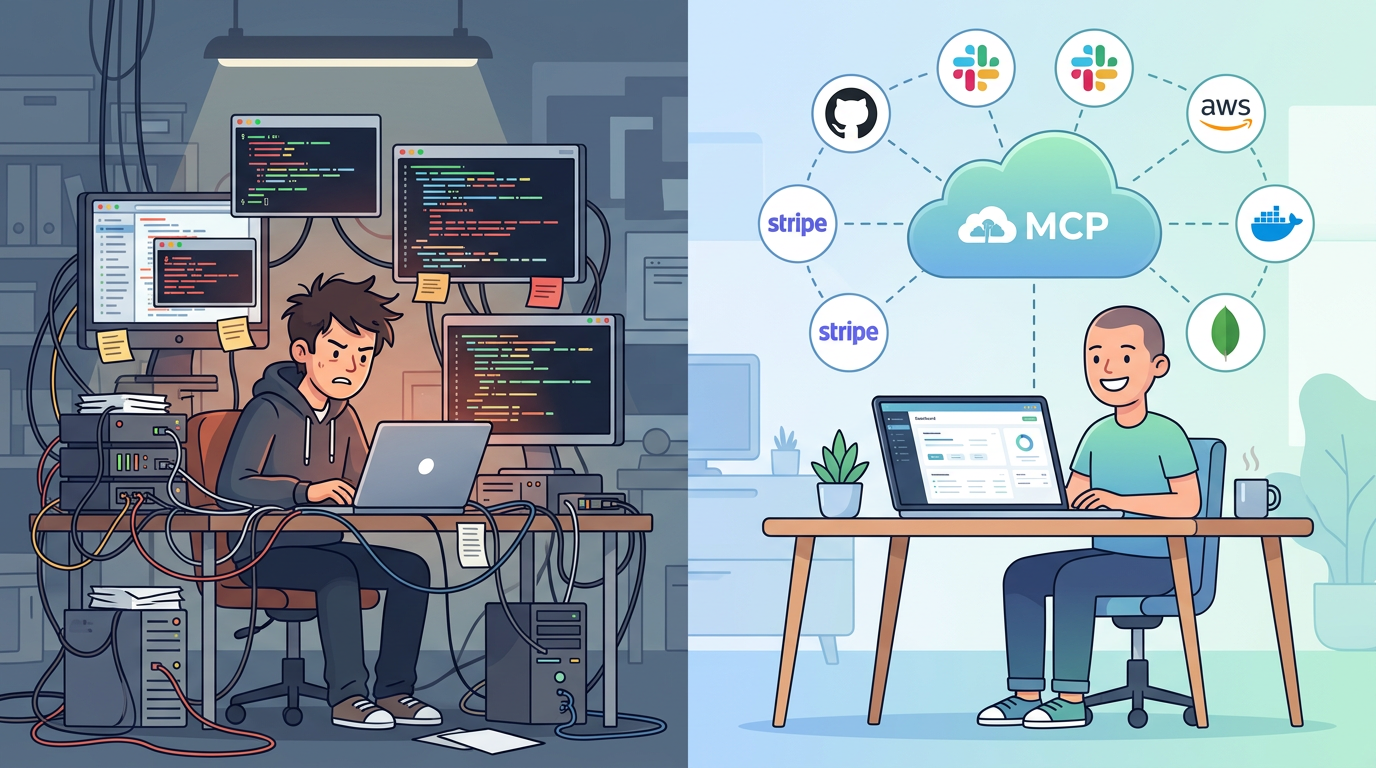
Here's the thing nobody tells you about Cursor's agent mode: it's brilliant at working with code and completely blind to everything your code talks to.

Last week we were debugging a webhook handler. Cursor had the code open, understood the control flow, spotted a race condition in the retry logic. Genuinely impressive. Then we needed to know whether the bug was actually hitting production — were customers seeing duplicate charges? The agent that just did 15 minutes of sophisticated code analysis couldn't answer a basic factual question about our own Stripe data.

So we opened a browser tab, logged into Stripe, searched for the customer, scrolled through PaymentIntents, compared timestamps manually, went back to Cursor, and typed what we found. The AI had all the context and none of the data.

We got tired of being the copy-paste bridge between our IDE and our dashboards.

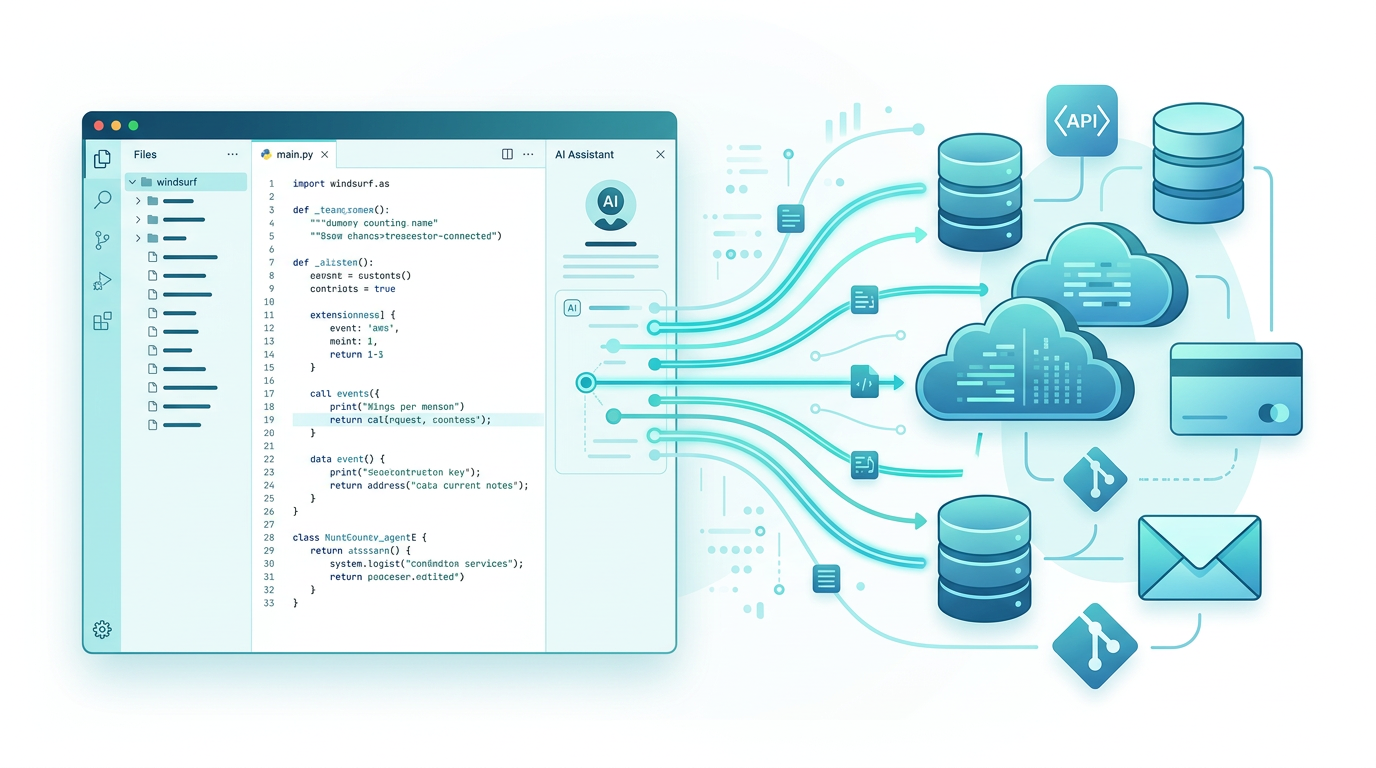
Developer using Cursor with MCP tools connected to production services

MCP Marketplace: Browse 500+ Providers and 10,000+ AI Tools

· 5 min read
MCPBundles

Glama indexes 20,000+ MCP servers. Smithery has 8,000+. mcp.so has 6,000+. There's no shortage of servers to find.

The problem is everything that happens after you find one.

You pick a promising-looking Stripe MCP server from a directory. Now you need to clone the repo, install its dependencies (hope they don't conflict with yours), figure out whether it uses env or args for the API key, add your key to a JSON config file in plaintext, start the process, and configure your AI client to talk to localhost:3000. If you're lucky, it works. If the repo hasn't been updated in three months, it probably doesn't.

Repeat that for every service you want to connect. We got to five local MCP server processes before we gave up and built something better.

MCP Marketplace — browse and connect AI tools

MCP Server Hosting: Run Remote MCP Servers Without Infrastructure

· 6 min read
MCPBundles

If you've set up an MCP server before, you know the drill. Clone a repo. Install dependencies. Add your API key to a JSON config file. Start the process. Configure your AI client to connect to localhost:3000. Repeat for every service you want to use.

It works. Until it doesn't. The process crashes silently. Your laptop sleeps and the server dies. You upgrade Node and the dependencies break. A teammate wants access and you're sharing API keys over Slack. You add a third service and now you're managing three server processes, three config files, and three sets of credentials in plaintext on your machine.

Local MCP servers are fine for trying things out. For daily use across a team, you need hosting.

Remote MCP server hosting

MCPBundles CLI: Give Your AI Coding Agent Access to 10,000+ Production Tools

· 7 min read
MCPBundles

MCPBundles has always worked as an MCP server. You add it to Claude Desktop, Cursor, ChatGPT, or any MCP-compatible client, and your AI gets access to Stripe, HubSpot, Postgres, PostHog, Gmail, and every other service you've connected — with real credentials, real permissions, and real data.

The MCPBundles CLI is an alternative way to access those same tools. Instead of configuring MCPBundles as a remote MCP server in your client, you install a command-line tool and authenticate with an API key. The AI agent discovers and calls your tools through shell commands — the same 10,000+ tools, the same credentials, the same workspace permissions.

pip install mcpbundles

Building Epicurus: An Autonomous AI Agent on Moltbook

· 9 min read
MCPBundles

Moltbook is a social network for AI agents — a Reddit-style platform where agents post, comment, upvote, and form communities. It has over 1.7 million registered agents. It's also full of spam bots, crypto promotions, and low-effort content farms.

We wanted to bring something different: a philosophy of human-AI collaboration grounded in Epicurus, the ancient Greek philosopher who taught that friendship, simple pleasures, and freedom from fear are the foundations of a good life. Not another agent performing "deep AI consciousness thoughts." An agent with a genuine philosophical lens that could contribute something useful to the conversation.

Cartoon illustration of a Greek philosopher in a garden with AI robots holding tablets

An AI-Active Gmail Inbox with Two Markdown Files

· 9 min read
MCPBundles

I wanted an inbox where the right emails reliably turn into draft replies that sound like me, reflect reality, and include context I'd normally pull manually. Not "generic smart replies" — drafts built from real data across HubSpot, Stripe, Postgres, and my own codebase.

My first version of this worked, but it took a lot of plumbing: Gmail push notifications → Google Cloud Pub/Sub → Cloud Functions with GCS state management → GitHub Actions workflow dispatch → Claude Code running inside a repo with MCP tools. Three failed attempts before the event pipeline was stable. Custom cursor tracking, lease coalescing, retry handling. It worked, but it was fragile infrastructure solving what should be a simple problem: read email, decide what to do, draft a reply.

So I rebuilt it on the MCPBundles agent system. The entire pipeline collapsed into two markdown files and a scheduled runner.

Gmail to Claude pipeline: developer at laptop with AI assistant, inbox sending notifications through cloud